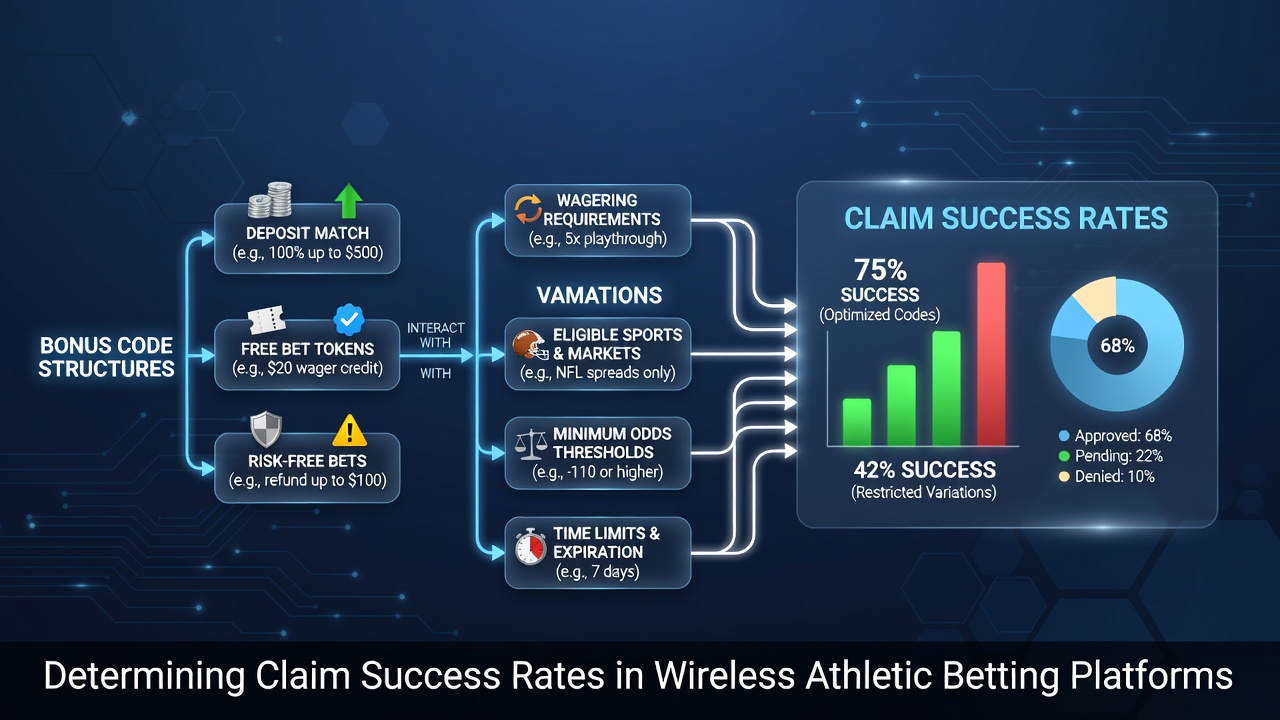
How Bonus Code Structures Interact With Game Rule Variations to Determine Claim Success Rates in Wireless Athletic Betting Platforms
Wireless athletic betting platforms rely on precise alignments between bonus code structures and game rule variations, and these alignments shape claim success rates in measurable ways. Observers note that bonus codes typically embed specific activation conditions such as minimum wager thresholds, time-bound validity periods, and sport-specific eligibility filters, while game rules introduce variables including odds formats, event outcome definitions, and payout multipliers that either reinforce or conflict with those conditions.
Core Elements of Bonus Code Structures
Bonus code structures consist of layered parameters that dictate redemption eligibility. Data from industry reports shows these parameters often include wager multipliers ranging from 5x to 20x, maximum cashout caps, and geographic restrictions tied to licensing jurisdictions. Researchers tracking platform behavior in October 2026 found that codes with multi-sport requirements produced lower claim success rates when paired with single-sport event rules, because the underlying game mechanics enforced separate settlement protocols for each athletic category. Platforms adjust these structures seasonally, and shifts in code layering correlate with changes in user redemption patterns across wireless networks.
Game Rule Variations in Athletic Events
Game rule variations encompass differences in how outcomes register, such as live in-play adjustments versus pre-event fixed odds, and these variations directly affect whether a bonus code processes successfully. Studies conducted by academic institutions indicate that rule sets allowing partial stake settlements or cash-out options can bypass certain bonus code restrictions, whereas strict all-or-nothing settlement rules create friction points. According to figures from the Nevada Gaming Control Board, platforms operating under consistent rule interpretations reported claim success rates 12 to 18 percent higher than those managing mixed-rule environments during the 2025-2026 season.
Interaction Mechanisms Between Codes and Rules
Interactions occur at the point of claim validation, where the platform's backend cross-references code parameters against active game rules. One study revealed that codes requiring accumulator bets succeeded at higher rates when game rules permitted same-event parlay combinations, but rates dropped when rules prohibited intra-event stacking. What's interesting is how timing alignments matter: a code valid for 48 hours after activation meets success thresholds more reliably when paired with game rules that finalize outcomes within that window, whereas extended settlement rules extend the validation period and introduce additional failure vectors. Platforms in regions governed by the Malta Gaming Authority have documented these patterns through internal audits that track code-rule mismatches across thousands of daily claims.
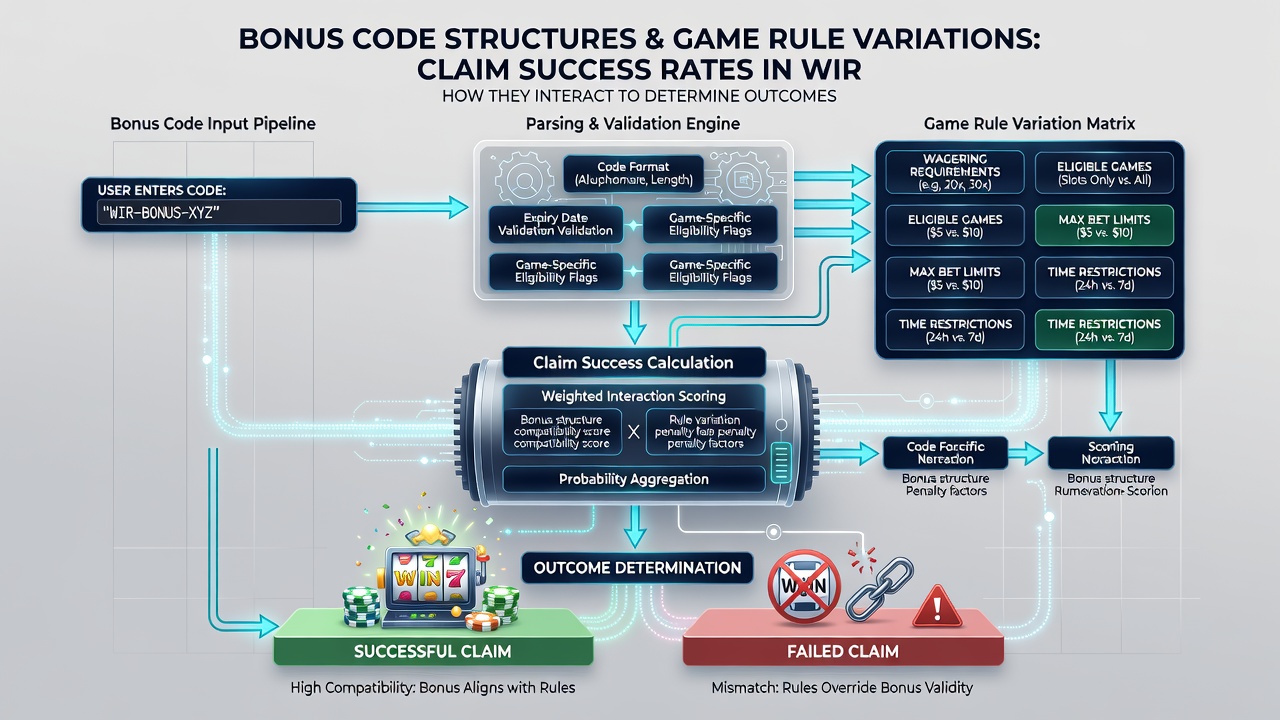
Take one platform operator who adjusted accumulator rules to match popular bonus code formats in early 2026. Observers recorded a measurable uptick in successful redemptions because the revised rules reduced instances where partial wins invalidated the entire bonus stack. Data indicates that similar adjustments across multiple wireless systems produced comparable effects when rule changes addressed the most common code restrictions, such as minimum odds thresholds or event-type exclusions.
Measured Impacts on Claim Success Rates
Claim success rates fluctuate based on how closely bonus code conditions mirror the operational logic of game rules. Research from Gambling Research Australia shows that platforms enforcing uniform payout multipliers across all event types achieved redemption rates above 65 percent for time-limited codes, while platforms with variable multipliers tied to specific sports saw rates fall below 45 percent. These differences emerge because mismatched multipliers trigger automated rejections during the final settlement stage. Analysts tracking October 2026 activity noted that codes tied to live betting rules performed better when game mechanics allowed real-time odds updates, because the code validation engine could confirm eligibility against live data streams rather than static pre-event figures.
Regional Regulatory Influences
Regulatory frameworks shape the available rule variations and therefore influence code effectiveness. Jurisdictions with detailed specifications for outcome definitions and settlement timelines create environments where bonus codes can be calibrated more precisely. Reports from the Australian Communications and Media Authority highlight how standardized reporting requirements help platforms identify recurring code-rule conflicts before they affect large numbers of claims. In contrast, regions with broader rule flexibility see wider variance in success rates, as operators must accommodate diverse event formats without dedicated code adjustments for each variation.
Conclusion
Bonus code structures and game rule variations determine claim success rates through direct parameter matching at the validation layer. Platforms that align code conditions with existing rule sets record higher redemption volumes, while misalignments produce measurable drops in successful claims. Data collected through 2026 continues to demonstrate these relationships across wireless athletic betting environments, and ongoing platform adjustments reflect efforts to reduce friction at the intersection of codes and rules.